
Paris Directory Volumes at TSLAC
The Texas State Library and Archives Commission, or TSLAC, is the clearest published shelf source for Paris city directories. Its holdings page lists a discontinuous run: 1891-92, 1919, 1921, 1936, 1940, 1946, 1948-49, 1951, 1960, 1961, 1962, 1964, 1978, and 1983. Those are individual Paris volumes that TSLAC lists, not evidence of a complete annual run. They also do not establish that every volume is digitized or available remotely. Ask TSLAC about the specific year, call number, reproduction options, and current access before planning a visit or request.
| Collection | Years | Where Held | Access |
|---|---|---|---|
| Paris city directories | 1891-92; 1919; 1921; 1936; 1940; 1946; 1948-49; 1951; 1960-62; 1964; 1978; 1983 | TSLAC | Shelf or reference access; confirm availability and reproduction |
| Lamar deed records and indexes | 1841-1889 filmed; later coverage varies by source | TSLAC, Paris Junior College, County Clerk, possible FamilySearch access | Film, office, and catalog routes |
| Lamar County Echo | Displayed 1960s-1979 material | UNT Portal to Texas History | Digitized university archive |
| Lamar County cemetery database | Burial dates vary | Lamar County Genealogical Society | Online database with stated citation conditions |
The TSLAC city-directory holdings page is the source shown below. It is a useful starting image because the Paris row makes the gaps visible.
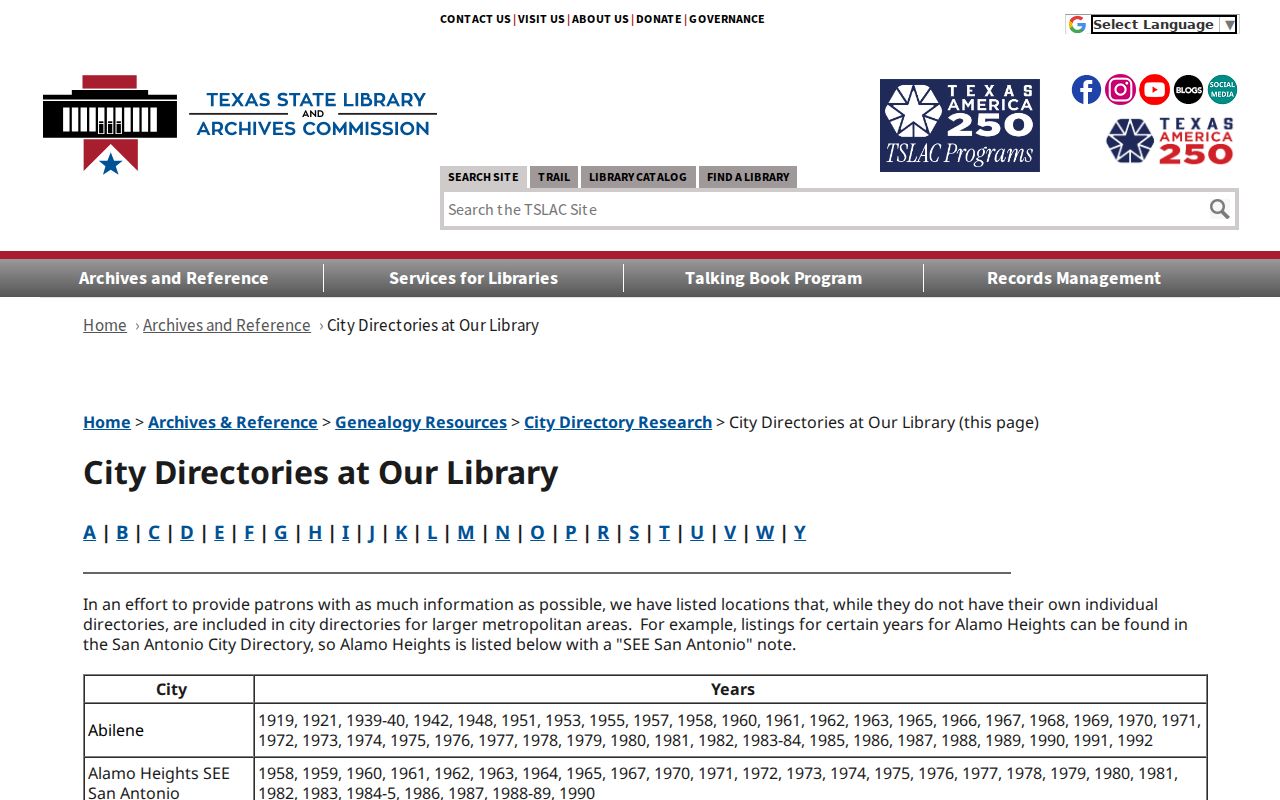
Use the listed years as checkpoints. Between them, a deed, tax roll, newspaper item, cemetery record, or census schedule may provide the next dated clue.
Paris Directory Beginnings and Gaps
The early item is identified in historical-reference material as General Directory of the City of Paris, Morrison & Fourmy, Galveston, 1891-92. The spelling of the publisher should be checked on the title page before it is quoted in a citation because older references can vary in OCR. More importantly, no evidence supports treating 1891 through 1983 as one unbroken Paris directory series. The TSLAC list is a run of named holdings with substantial gaps.
That discontinuity changes the search method. Mark each confirmed directory year on a family timeline, then use a different record type for the years in between. The TSLAC guide says city directories commonly include names, addresses, telephone numbers, and spouses, sometimes with occupation or owner-renter information. That is a guide to what may appear. It does not prove an exact Paris entry format in every listed volume.
- 1891-92: TSLAC lists the earliest confirmed Paris directory holding, identified in historical-reference material as the Morrison & Fourmy title.
- 1919-1951: TSLAC lists selected Paris volumes for 1919, 1921, 1936, 1940, 1946, 1948-49, and 1951, with gaps between them.
- 1960-1964: The named Paris holdings include 1960, 1961, 1962, and 1964, not a confirmed annual sequence.
- 1978 and 1983: These are later listed Paris volumes; research did not establish a final printed year for the city.
Note: A missing Paris directory year is a reason to change sources, not proof that a household left Lamar County.
Paris Directory Research at Santa Fe Depot
The Lamar County Genealogical Society library gives Paris researchers a local place to ask about directories, family files, cemetery references, obituaries, and related materials. It is at 1135 Bonham Street in the old Santa Fe Depot. The society lists Monday through Friday hours of noon to 4 and second and fourth Saturdays from 10 to 4, while also warning that hours can change. Call 903-784-5020 before traveling. Research contact by appointment, letter, or email may be possible, but service and fee details should be confirmed directly.
Established in 1983, the society describes more than 1,000 family-history books, hundreds of family-group sheets and pedigrees, and more than 130 family histories. Those resources can help explain why a name appears in a Paris directory, but they are separate from the directory itself. The research area has a practical rule that matters on arrival: bags, coats, and food are not allowed, and personal items may be searched.
The Society's old Santa Fe Depot library page is represented in this reference image.

Bring a surname, a street, and a target year. That narrow request gives staff a better chance to identify the right local shelf, obituary reference, or family-history file.
Paris Directory Entry Clues
An actual Paris page was not available for full inspection in the research record, so a responsible search begins with an inventory rather than an invented sample. Check the title, introduction, and abbreviation key in the volume at hand. The TSLAC research guide identifies the fields city directories commonly carry, but each Paris edition can make different editorial choices. Preserve the printed spelling and street form before converting anything to a current map.
| Name and initials | The primary search key; compare spelling variants and initials. |
|---|---|
| Street address | A dated address clue that can be tested against deeds, maps, and census records. |
| Telephone number | A possible same-name separator when the volume includes it. |
| Spouse or household notation | A possible family connection, not a substitute for a vital record. |
| Occupation or owner-renter mark | May appear under the general guide; verify the Paris volume's key before interpreting it. |
| Abbreviations and cross streets | Needed before matching an older street form to a later address. |
- Criss-cross directory
- An address-first section that can point from a street location to a listed name. A Paris reverse-volume run has not been verified, so ask the local repository before relying on one.
- Householder index
- A name arrangement centered on a household or named resident. Its presence and format must be checked in the edition used.
- Abbreviation key
- The volume's explanation of shortened words and symbols. Photograph or transcribe it before drawing conclusions from an entry.
Paris Directories Beside the Echo
A directory gives a snapshot. A newspaper can add a date and context. The UNT Portal to Texas History Lamar County Echo collection displayed 720 digitized items and material from the 1960s through the 1970s during research. Search an issue date, name, address, obituary, civic notice, or advertisement, then save the citation and page or image reference. An advertisement is not the same evidence as a household listing, so label it accurately.
The UNT city-directory collection search is also worth checking by place and title. The inspected collection page did not verify a Paris, Texas item. FamilySearch offers a U.S. city and business directories collection and a catalog search, but access, images, and availability can be restricted. Search its catalog for Lamar County and the relevant title rather than assuming a collection result contains the needed Paris volume.
The UNT city-directory collection search page is shown here as an access lead, not as proof of a digitized Paris directory.
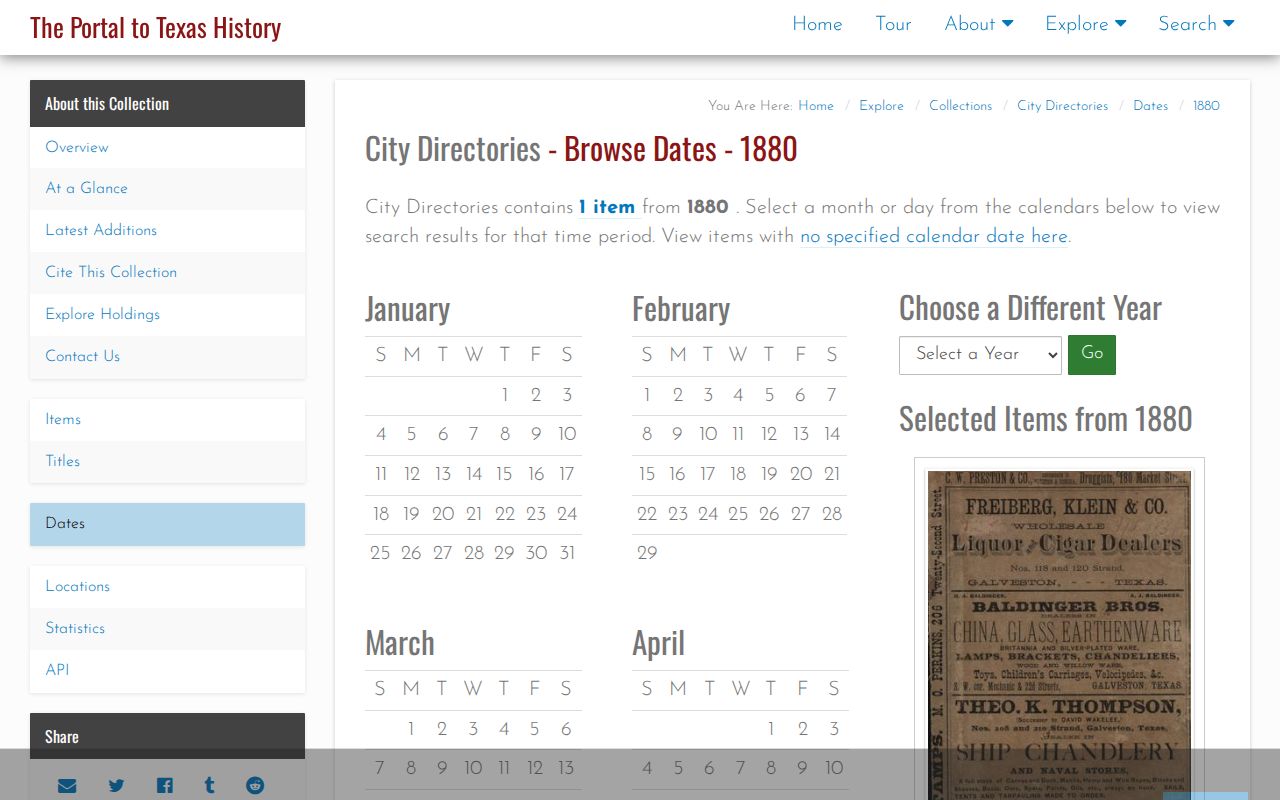
When a relevant issue or volume is found, cite the repository, title, date, page, and image reference. Those details make a later check possible.
Tracing Paris Directory Households
Follow one name across the confirmed Paris directory years, but keep ownership and occupancy separate. A directory can place a listed person or household at an address for its date. A deed records a legal interest. A census describes a household at an enumeration date. Pairing these records makes the changes between the scattered Paris volumes easier to test.
- Start with the earliest confirmed directory volume where the surname appears, and record the name exactly as printed.
- Move through the next listed Paris volumes, noting each address, telephone entry, spouse notation, and change in initials.
- For a household question, pair the nearest available federal census with the directory year. Federal schedules follow a 72-year release rule.
- Check the Lamar deed index or older deed records when the address changes, using legal description to avoid relying only on a street label.
- Use the cemetery database, newspaper notices, or probate materials when a person disappears, while treating each as evidence for its own date and purpose.
For a present-day street trail, use the address-focused Paris street directory lookup rather than assuming an old listed address has modern occupants. For one historical person, compare a directory result with a relative, middle initial, street, and record date before connecting records.
Paris Records After the 1916 Fire
Paris directory research sometimes meets a gap that a simple name search cannot solve. In March 1916, a fire damaged the 1896 Lamar County courthouse and destroyed much of downtown. The Texas Historical Commission identifies the current 1917 courthouse, while an older records vault survived and was incorporated into the annex. The courthouse date is therefore not the start date for every Lamar record group.
TSLAC notes that district-court civil dockets from 1887 to 1904 include missing volumes 16 and 18, poor-condition pencil or erasure problems, and unusually few dockets surviving the fire. A missing court item does not erase a Paris person from history. Deed direct and reverse indexes, probate materials, tax rolls, newspapers, cemetery references, and family papers can corroborate a directory gap from different angles.
The Texas Historical Commission courthouse marker record supports the fire context shown below.
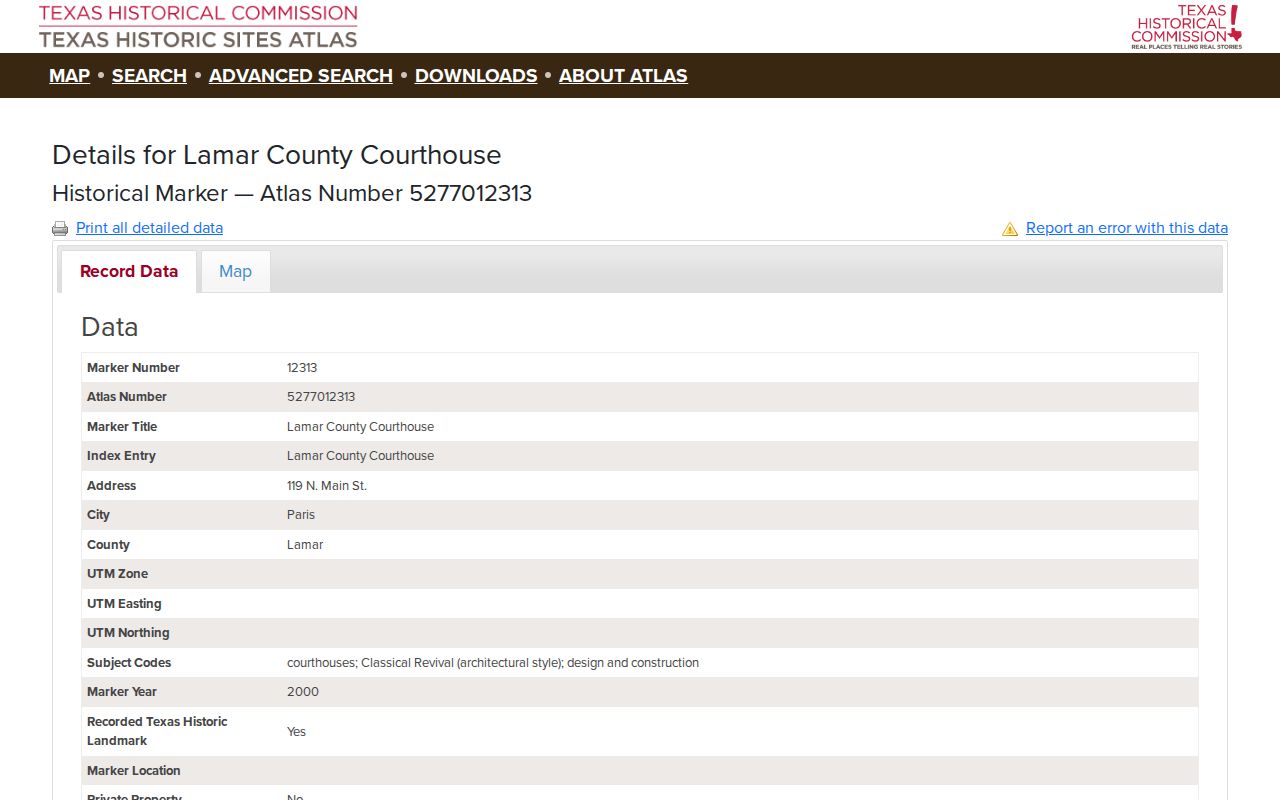
The practical lesson is simple: ask a repository which series survived and where it is held, rather than treating a blank index as a final answer.
Note: Court dockets, deeds, tax rolls, and directories answer different questions, so their dates should be compared rather than merged into one claim.
Paris Directory Context at the Museum
The Lamar County Historical Society offers another route for placing a Paris directory entry in local context. Its site lists a museum with historical artifacts, photograph archives, and local heritage material, open Saturday from 10 to 4 or by appointment. A separate local museum listing describes early postcards, a 1916 fire room, military material, railroad history, and other collections. These are context sources, not current resident rolls.
Confirm both hours and the address before visiting. The society page gives 1015 W Kaufman and a post-office box, while a local museum listing gives 1009 W Kaufman and phone 903-783-0064. That discrepancy should be resolved with the museum. A photograph, postcard, or archive file can help interpret a street or business in a directory, but it should be cited as an archival item rather than as proof of an address.
The Historical Society's museum page is the source for this Paris city directory research image.

A dated directory, a map, and a properly cited archival image can make a stronger family-history record than any one item alone.
Paris Directory Access Checks
Start with the specific volume, then choose the repository that can actually supply it. TSLAC is the published source for the named Paris directory years. The Lamar County Genealogical Society can help identify local family-history and cemetery material. FamilySearch can be searched by place, title, author, subject, surname, call number, or film and image-group number, but availability settings and affiliate restrictions may limit a result. The County Clerk, TSLAC microfilm, and FamilySearch catalog also provide routes when a directory question turns into a deed, probate, marriage, tax-roll, or court question.
The strongest Paris directory conclusion identifies the volume year, the repository, the exact printed form, and what the entry does and does not establish. That care protects family-history work from being built on a date gap, an address change, or an unverified reverse index.