
Paris Previous Residents by Era
A Paris address trail moves across several records because each source sees the property at a different time. Begin with the current appraisal record, then work through recorded deeds to earlier legal transfers. Historic directories and census schedules add household clues for their own dates. TSLAC microfilm, the County Clerk, and FamilySearch catalog access become important when the online index no longer reaches the period being studied. A current owner record does not establish a current occupant, and an old listing does not establish uninterrupted residence.
| Source | Years It Covers | Where Held | What It Shows |
|---|---|---|---|
| Current CAD web selector | 2017-2026 | Lamar CAD | Selected-year appraisal, owner, situs, mailing, and parcel clues |
| County Clerk online land index | 1971-present in a detailed Society guide; a separate link says 1960 start | Tyler portal and County Clerk | Grantor/grantee and recorded-instrument index; verify cutoff |
| County deed books and indexes | 1841-1889 explicitly filmed; local guide says land records begin 1840 | TSLAC, Paris Junior College, County Clerk, possible FamilySearch | Legal transfers, direct/reverse party indexes, volume and page |
| Paris city directories | 1891-92, 1919, 1921, 1936, 1940, 1946, 1948-49, 1951, 1960-62, 1964, 1978, 1983 | TSLAC; local holdings to verify | Listed household and address clues, with possible telephone or spouse data |
| Federal census | Historical schedules released under the 72-year rule | Established archive and library routes | Household composition, relationships, occupation, and residence geography |
| Sanborn maps | Verified Paris items: 1885, 1888, 1946-50 | Library of Congress | Building footprint, use, lot, and fire-insurance geography |
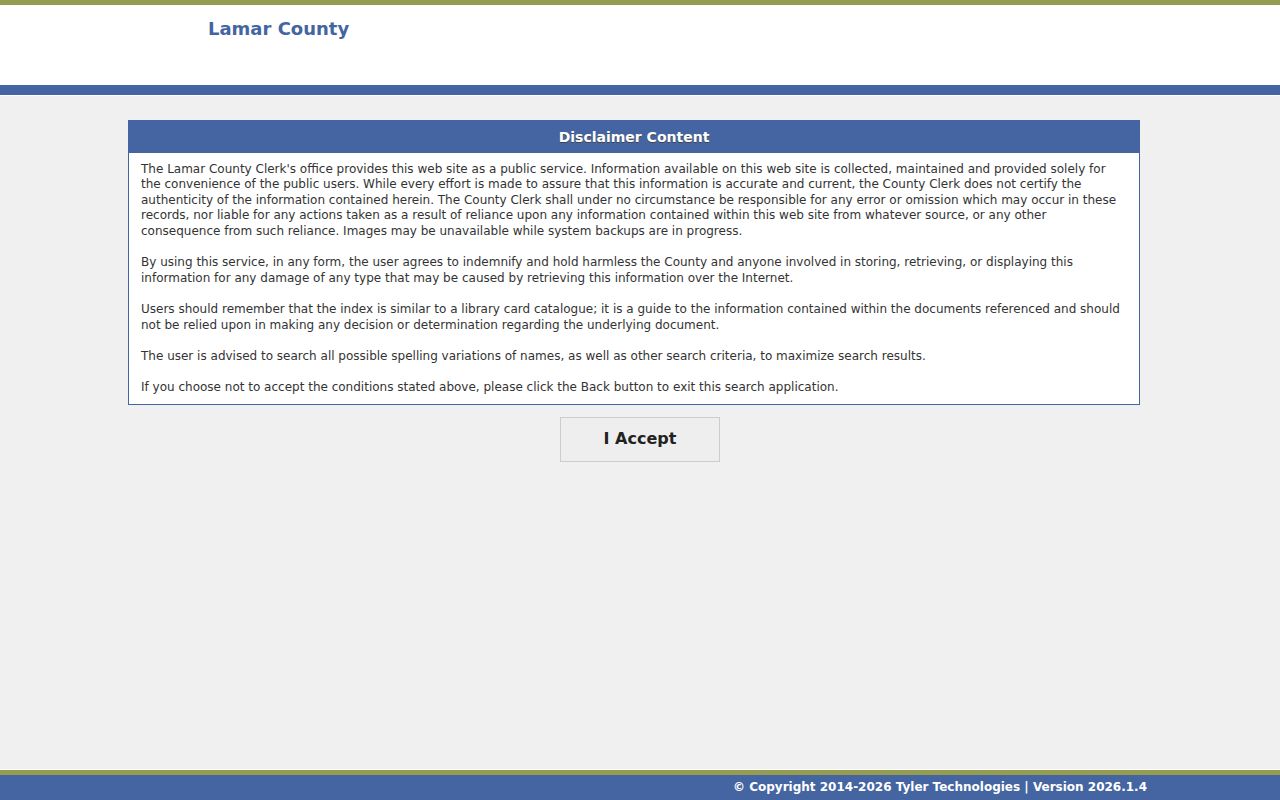
The Lamar County Tyler land-record gateway is the current online door for the deed index. Its disclaimer treats the index as a convenience tool, not a certified copy or replacement for the Clerk.
When the needed transfer is not online, the right next step is the Clerk, older deed books, or a verified microfilm route, not an assumption that no transfer exists.
Save Paris Parcel Records First
Open the Lamar County Appraisal District property search and look up the address with the format the form expects. The visible interface offers owner, address, ID, and advanced modes. Its street-name field directs researchers to omit prefix, suffix, and unit numbers. If a formatted Paris address fails, try the simple street name or reduce the search to the number and name. Save the property or geographic ID, legal description, subdivision or lot and block, situs address, mailing address, current owner name, and tax year.
These fields are not interchangeable. The situs address is the physical parcel location. The mailing address is where tax notices go and may belong elsewhere. The owner is an appraisal and title clue, not proof of who lives there. The legal description is often the best bridge to older deed records because street labels can change or disappear.
- Situs address
- The physical location of the parcel used in appraisal records.
- Mailing address
- The address used for tax notices. It can differ from the situs and should not be treated as an occupancy record.
- Legal description
- The lot, block, subdivision, abstract, or survey description used to identify land in recorded documents.
- Geographic or property ID
- A CAD identifier that helps match an appraisal record to a mapped parcel or a later search.
Note: Preserve the printed Paris street form before normalizing it, because old directories may abbreviate it differently from CAD.
Paris Previous Residents Through Deeds
The deed chain is a backward sequence of recorded interests. Begin with the current owner from CAD, then search that person or entity as the grantee in the County Clerk land index. A grantee is the party receiving an interest. The resulting vesting deed should be checked for the seller, known as the grantor, the legal description, recording date, instrument number, and volume or page. Search the prior seller as grantee to locate the earlier acquisition, then repeat. The land portal advises spelling variations, so test initials, married names, trusts, entities, hyphenation, and historical spellings when a name fails.
- Save the current CAD owner and legal description, keeping the situs and mailing fields separate.
- Search the current owner as grantee in the County Clerk index and narrow the result with the legal description, subdivision, or a likely period.
- Review or request the vesting deed, recording the parties, instrument number, recording date, and legal description.
- Search that deed's grantor as a grantee in an earlier record, then repeat the handoff from one transfer to the preceding transfer.
- Use the Clerk, deed books, or film when the web record ends, and ask the Clerk about an image or certified copy when one is needed.
- Grantor
- The party transferring an interest in a recorded instrument.
- Grantee
- The party receiving that interest. Searching each grantor as a new grantee is the usual backward method.
- Chain of title
- The sequence of recorded transfers connected by parties and a stable legal description.
Paris Deed Records Beyond the Web
The online cutoff needs care. A detailed Lamar County Genealogical Society guide says online land records are available from 1971 forward, while another Society link says deed-index records begin in 1960. The inspected Tyler page did not settle the conflict. Describe the online range as 1960 or 1971 depending on the local index description, then verify the date with the County Clerk. The date is a routing question, not a reason to abandon a Paris house history.
For the earlier chain, TSLAC's Lamar County microfilm listing reaches deed records from 1841 through 1889, including direct and reverse indexes and deed volumes. TSLAC also lists tax rolls from 1842 through 1910, marriages from 1841 through 1911, and probate and court material. FamilySearch catalog search can be used by place, title, author, subject, surname, call number, or film and image-group number. Availability may be restricted even when a catalog item appears.
The Lamar County Genealogical Society library can help identify local research routes. It is in the old Santa Fe Depot at 1135 Bonham Street, lists more than 1,000 family-history books and more than 130 family histories, and asks visitors to call 903-784-5020 because hours may change.

The Society also states that bags, coats, and food are not allowed in its research area, and personal items may be searched. Plan a visit around those access rules.
Paris Past Residents in Directories and Census
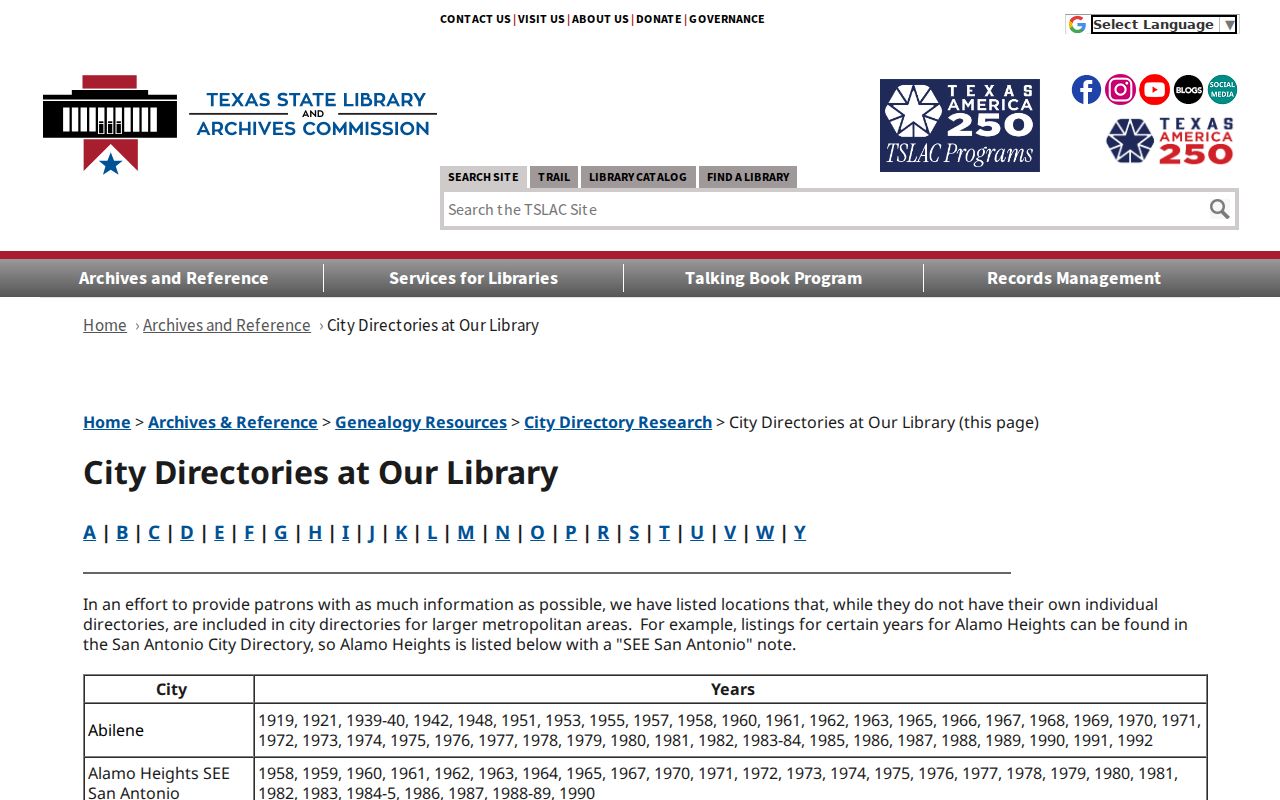
Deeds identify recorded parties. They do not prove that every party lived at the address. To find who lived here before, add a directory and census layer for the date in question. TSLAC lists Paris directories for 1891-92, 1919, 1921, 1936, 1940, 1946, 1948-49, 1951, 1960, 1961, 1962, 1964, 1978, and 1983. The run is discontinuous. The state guide says a city directory commonly includes name, address, telephone, spouse, and sometimes occupation or owner-renter information, but no exact Paris sample layout or reverse-directory run was verified.
Use a directory listing as a dated household clue. Pair it with the nearest released federal census, remembering that federal schedules use a 72-year release rule. Census geography can differ from the modern Paris address, so retain the township or precinct context before modernizing an address. The historical collection details belong with the Paris city directory collections, where access limits and specific TSLAC holdings are set out.
- Choose the TSLAC-listed Paris directory year closest to the deed transfer or family event being researched.
- Transcribe the printed name, address, and any household information exactly, including abbreviations.
- Check the nearest federal census that has been released, preserving its township or precinct before matching it to a modern Paris address.
- Compare the household clue with the deed's legal description and a dated newspaper, cemetery, probate, or tax record when the evidence conflicts.
The TSLAC Paris directory holdings page is the source shown below.
For a name that vanishes between volumes, look for a move, a death, a changed spelling, an unlisted household, or a gap in the printed run before drawing a conclusion.
Paris Previous Residents and Tax Rolls
Tax rolls provide a different kind of continuity check. TSLAC lists Lamar tax rolls from 1842 through 1910. They can support property or taxpayer context around a transfer, but they are not an occupancy census. Federal census schedules can give household composition, relationship, occupation, and residence geography for their census date. A directory can give a listed address and a deed can show a recorded interest. None establishes continuous occupancy on its own.
Set each source on a dated sequence: legal description and deed transfer, tax-roll entry, directory listing, census schedule, newspaper notice, and later probate or cemetery record. If two records disagree, preserve the difference rather than forcing a match. A surname can recur in a community, and a mailing address can be unrelated to the parcel being researched.
Lawful house history. Use Paris records for family history, estate research, property history, or personal curiosity. Do not use a historical trail to follow, harass, or harm a living person.
Paris Address Records on Sanborn Maps
Maps can date the physical setting without naming every household. The Library of Congress has verified Paris Sanborn items from 1885 with five sheets, 1888 with six sheets, and 1946-50 with 40 sheets. A map can show a lot or building footprint, use, construction context, outbuildings, and historical street form. It is a fire-insurance map, not a resident directory, so pair it with a deed, directory, census, or newspaper record.
Start by locating the legal-description or street context from the deed and CAD record. Then compare the older map's street form to the current location. If the street name or numbering does not match, save both forms and search the records by the legal description, subdivision, lot, block, or party names. This creates a safer bridge than assuming the current street address existed in the older period.
Note: The official map items verify the three stated Paris dates, but they do not establish a complete Sanborn run for every year.
Paris Address Records by Request
Permit and code records can add construction, alteration, inspection, or case chronology to a house history. No public Paris address-results portal was verified for those files. The appropriate route is a targeted request through the City of Paris Texas Public Information Act process, with the exact street number, street name, and date range. Ask for permit application, issue or final-inspection information, alteration description, code notice, case disposition, and associated public fields, subject to exemptions.
Paris Engineering provides the city route for street, utility, flood-plain, and geography maps. A code complaint is not the same as a released case file. If enforcement led to a citation, Municipal Court can be a different custodian. For old county material, the County Clerk and TSLAC are the parallel fallbacks rather than the city request channel.
Paris Previous Residents at Trail Endpoints
When a prior Paris person drops out of a directory or deed chain, close the search with records that fit the event. The Lamar County cemetery database is a burial and tombstone source, not a complete death register. UNT's Lamar County Echo collection can be searched by issue date, name, address, obituary, civic notice, or advertisement. Probate records can identify heirs and a later address, but an heir named in an estate record is not proof that the heir lived at the old home.
The 1916 courthouse fire also matters when records are missing. An older records vault survived and was incorporated into the annex, while some district dockets and volumes did not survive intact. Use the Clerk, TSLAC microfilm, newspapers, probate, deeds, tax rolls, cemetery records, and family material as separate checks. A well-supported Paris previous residents trail says which record supports ownership, which supports household presence, and which simply supplies a lead.